Your living room is the heart of your home, where family gathers, guests arrive, and you unwind after a long day. Yet many homeowners treat it like a waiting room rather than a space worth styling. The good news? Fresh living room style ideas don’t require a full renovation or a designer’s budget. Whether you’re drawn to clean minimalism, warm contemporary comfort, or something in between, the right approach combines function with personality. This guide walks through practical strategies for color, furniture placement, lighting, and accessories that work for real homes, not just magazine spreads. You’ll find actionable ideas to transform your living room into a space that reflects who you are and how you actually live.
Table of Contents
ToggleKey Takeaways
- Living room style ideas work best when they prioritize function first and balance aesthetics with how you actually use the space.
- Minimize visual clutter by anchoring your room with one strong focal point and layering storage with built-in cabinetry or closed shelving to maintain a calm atmosphere.
- Create warmth and personality by layering lighting at different heights, mixing natural textures like linen and wood, and using a cohesive color palette with one to two supporting accent colors.
- Arrange furniture 12–18 inches from walls to define conversation zones, allow proper clearance around seating, and keep traffic pathways clear, especially in open-concept homes.
- Elevate your space affordably with accessory essentials—throw blankets, area rugs, gallery walls, and three curated items per shelf—that add personality without overwhelming the room.
- Use dimmer switches and multiple light sources at varied heights to avoid harsh shadows and create an inviting atmosphere that adapts to different times of day and moods.
Modern Minimalist Design: Clean Lines and Functional Living
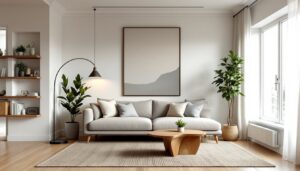
Minimalist living room style is about restraint, removing visual noise so what remains has room to breathe. This doesn’t mean sparse or cold: it means intentional. Start by anchoring the room with one strong focal point: a fireplace, accent wall, or low-profile media console with clean geometry. Choose a neutral base (whites, grays, warm beiges) and limit yourself to two accent colors maximum.
Furniture should have simple profiles without ornate legs, carved details, or heavy skirts. A sectional with straight edges or a mid-century-inspired sofa works better than a overstuffed, patterned piece. Wall-mounted shelving instead of freestanding bookcases reduces visual clutter while keeping everyday items accessible. Keep surfaces mostly clear, a single plant, a stack of three books, one framed photo per shelf. Designer examples show how minimalist living room ideas rely on proportion and whitespace rather than abundance.
Storage is non-negotiable in minimalism. Built-in cabinetry, closed shelving, or low consoles with doors hide the things you need but don’t want to see. Floating shelves work too if you style them sparingly, don’t cram them. The payoff: a room that feels larger, calmer, and easier to maintain.
Warm Contemporary Comfort: Blending Coziness With Style
Contemporary design doesn’t have to feel sterile. Warm contemporary blends modern furniture and clean lines with textures, layers, and inviting colors that say “sit here and stay awhile.” This approach works especially well for lounge decorating ideas, think a plush upholstered armchair, throw blankets in natural fibers, and a coffee table in wood or warm metals rather than cold glass.
Start with a neutral wall color (warm gray, soft taupe, or off-white) and introduce warmth through living room accessories ideas like textured rugs, linen curtains, and natural wood accents. Leather, wool, and linen outperform synthetic fabrics in this style. Layer lighting (discussed below) so the room feels inviting at dusk. Incorporate one or two statement pieces, perhaps a sculptural floor lamp, a mid-century credenza, or an abstract artwork that pulls your accent color into the space.
The key difference from minimalism: you can be more generous with accents. A throw pillow on the sofa, a ceramic vase on the console, framed prints on the wall, these add personality without visual chaos. Keep the overall palette warm and cohesive, and you’ll achieve that rare balance of stylish and lived-in.
Color Palettes That Work: Finding Your Perfect Scheme
Color choice sets the emotional tone. Neutral bases (soft whites, warm grays, warm taupes) make your space feel larger and give you flexibility to change accents without repainting. If your living room feels dingy, you might need a fresh coat of primer and paint, don’t just paint over discolored or glossy walls. Two coats of quality paint (expecting 350–400 sq. ft. per gallon coverage) is standard.
For accent colors, stick to a rule: pick your base, then choose one to two supporting colors that sit 120–180 degrees apart on the color wheel (analogous or complementary). Warm accents (burnt orange, sage green, deep teal) work well in contemporary schemes. Cool accents (navy, charcoal) suit minimalist or modern spaces. Test paint samples on your walls in natural and artificial light for at least a few days, paint color looks different at 10 a.m. and 6 p.m.
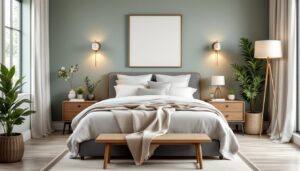
Bedroom interior ideas often transfer to living spaces: soft, muted tones promote calm and make smaller rooms feel bigger. If you love bold color, apply it to an accent wall, artwork, or textiles rather than all four walls. This gives you punch without commitment.
Furniture Arrangement for Maximum Flow and Function
Good furniture placement looks effortless but requires intentionality. Start by identifying the room’s natural focal point, usually the fireplace, a window view, or the wall opposite the entry. Face seating toward that focal point. In a rectangle room, avoid pushing everything to the perimeter: instead, float a sofa and chairs 12–18 inches from the wall to define a conversation zone.
Measure doorways, windows, and architectural features before buying anything. A sofa typically measures 30–36 inches deep and 72–96 inches wide: allow 18 inches of clearance in front for walking and 3–4 feet for a coffee table and legroom. Arm chairs work better than additional sofas in smaller rooms, they’re easier to move and don’t visually anchor you to one spot.
Traffic flow matters more than most people think. If guests always cut through your sitting area to reach the kitchen, rearrange so the pathway stays clear. Use a low console table or narrow shelf behind a floating sofa instead of a side table if space is tight. In open-concept homes, a area rug (7×10 feet or 8×10 feet is standard) defines the living zone without walls.
Lighting Layers: Creating Ambiance and Enhancing Your Design
Professional designers use three layers: ambient (overall brightness), task (reading, working), and accent (highlighting décor). Ambient light often comes from ceiling fixtures or recessed lights, ensure your room has at least 2–3 light sources at different heights. Task lighting includes table lamps on end tables or console tables (40–60 watts equivalent LED is typical) and floor lamps beside armchairs. Accent lighting highlights artwork, shelving, or architectural features with spotlights, track lighting, or wall sconces.
Dimmer switches are a game-changer: they let you adjust brightness for time of day and mood without rewiring. Most LED bulbs are now dimmable, check labels to confirm. A common mistake: relying on one overhead fixture. This creates harsh shadows and makes the room feel institutional. Instead, layer multiple fixtures at different heights and angles so the space feels warm and inviting at 7 p.m. and still functional at 2 p.m.
String lights, candles, or accent lamps behind furniture add visual interest and warmth. In modern homes, smart bulbs let you adjust color temperature, cooler light for focus, warmer for relaxation.
Decor Accents and Finishing Touches on a Budget
Accessories seal the deal between “decorated” and “designed.” Start with functional pieces that look good: a throw blanket, area rug, and throw pillows in coordinating colors and textures. These cost $20–$150 each depending on quality, and they’re easy to swap if you want a seasonal refresh. Linen and cotton outperform polyester for durability and feel.
Wall art doesn’t need to be expensive, a gallery wall of 5–7 framed prints (black or white frames, $15–40 each) makes a bigger impact than one expensive piece. Thrift stores, estate sales, and online marketplaces often have quality frames you can repurpose. A single statement mirror reflects light and makes the room feel larger: hang it opposite a window if possible.
Live plants or realistic faux greenery add life without upkeep demands. A tall plant in a corner (fiddle leaf fig, snake plant) fills dead space: smaller potted plants on shelving add depth. Candles, wooden bowls, books stacked horizontally, and a few ceramic pieces round out the look. The secret: resist the urge to fill every surface. Modern living room design and interior design tips often emphasize that restraint, leaving 40% of a shelf or table empty, makes your carefully chosen pieces stand out. Aim for three items per shelf or table, not ten.
Conclusion
Your living room style isn’t about following trends or copying magazine spreads, it’s about creating a space that works for your life and reflects your taste. Start with one element: rearrange furniture, update your color palette, or layer new lighting. Small changes compound. As you carry out these practical ideas, your living room becomes less a showpiece and more a home. Whether you lean minimalist, warm contemporary, or a blend of both, the fundamentals remain: function first, then beauty: less is almost always more: and a room that serves your life beats a perfect room that makes you uncomfortable.