When it comes to kitchen appliances, few are as essential as the refrigerator. It’s the unsung hero of every home, tirelessly keeping leftovers fresh and ice cream at the perfect scoopable temperature. Without it, the battle against spoilage would be a losing one, and who wants to face the horror of a warm milk crisis?
But let’s face it, not all fridges are created equal. From sleek smart models that can tell you when you’re out of milk to retro designs that make your kitchen the envy of Instagram, choosing the right refrigerator can feel like a daunting task. With so many options available, it’s easy to get lost in the cold aisles of appliance stores. Fear not! This guide will help navigate the frosty waters of refrigerator shopping, ensuring you find the perfect fit for your culinary kingdom.
Types Of Refrigerators
Refrigerators come in various styles and configurations, each designed to meet specific needs and preferences. Understanding these different types helps consumers make informed decisions when selecting a refrigerator.
Top Freezer Refrigerators
Top freezer refrigerators feature a classic design with the freezer compartment located above the fresh food section. This layout offers easy access to frozen items, making it practical for users who store frequently used food items at eye level. Consumers often appreciate the larger shelf space in the fresh food section, allowing for versatile food storage. These models usually present a more affordable option, appealing to budget-conscious shoppers. They typically range in width from 28 to 32 inches.
Bottom Freezer Refrigerators
Bottom freezer refrigerators prioritize fresh food accessibility with the refrigerator section at eye level, while the freezer compartment sits below. This configuration enhances convenience, especially for those who regularly access fresh foods. Many users find it easier to organize and retrieve frozen foods in pull-out drawers, maximizing space efficiency. Models vary in features, with some offering French doors or single-door designs. Widths range generally from 30 to 36 inches, fitting most kitchen spaces.
Side-by-Side Refrigerators
Side-by-side refrigerators consist of two vertical compartments, with the refrigerator section on one side and the freezer on the other. This arrangement allows for easy access to both food types without bending or reaching high. Most models feature adjustable shelves and various door bins, enhancing customization for food storage. The narrow design often suits smaller kitchens where space is limited. Users commonly face trade-offs, as side-by-sides may provide less freezer storage than other models. Widths typically range from 30 to 36 inches.
French Door Refrigerators
French door refrigerators combine elegance and functionality, featuring two doors for the fresh food section and a pull-out freezer below. This layout optimizes refrigerator space while making it easy to organize food items. Users frequently highlight the generous shelf space and wide drawers for fruits and vegetables. Many models include advanced features, like smart technology or ice makers, catering to tech-savvy consumers. The average width falls between 30 to 36 inches, complementing modern kitchen designs.
Key Features To Consider
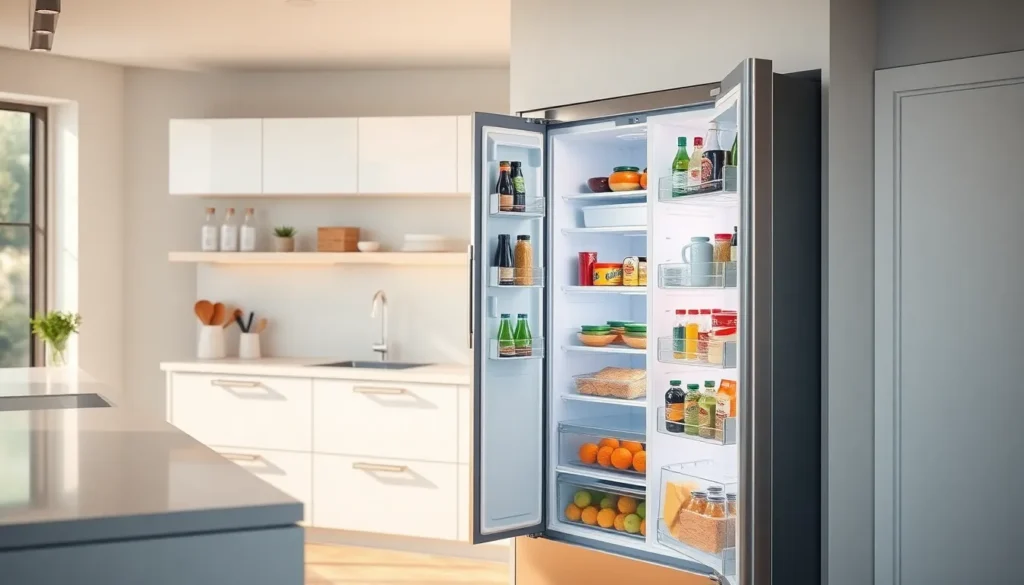
Choosing the right refrigerator involves evaluating several key features that enhance performance and usability.
Energy Efficiency
Energy efficiency stands out as a crucial feature when selecting a refrigerator. Models with Energy Star certification use up to 15 percent less energy than non-certified options. Opting for these models not only reduces utility bills but also minimizes environmental impact. In addition, refrigerators equipped with efficient compressors help maintain optimal temperatures without excessive energy consumption. Users can save substantial amounts over the appliance’s lifespan, making energy-efficient choices financially sensible.
Storage Capacity
Storage capacity directly affects how well a refrigerator meets individual or family needs. Most refrigerators range between 18 to 30 cubic feet of storage space. Larger families benefit from models with at least 25 cubic feet, allowing enough room for groceries and meal preparation. Specific layouts offer adjustable shelves and bins, providing flexibility for different food items. Additionally, dedicated compartments for fruits, vegetables, and dairy enhance organization, ensuring easy access to daily essentials.
Temperature Control
Temperature control technology plays a vital role in food preservation. Advanced models feature digital thermostats that allow precise adjustments, ensuring optimal conditions for various food types. Some refrigerators include multiple cooling zones, helping maintain ideal temperatures for perishables without cross-contamination. Quick cooling and quick freeze settings add convenience, rapidly lowering temperatures during grocery loading. Reliable temperature control prolongs food freshness, ultimately enhancing the refrigerator’s overall functionality.
Popular Brands Of Refrigerators
Various brands dominate the refrigerator market, each offering unique features and designs.
Whirlpool
Whirlpool stands out for its reliability and innovative designs. Many models feature advanced cooling technology that ensures optimal freshness. Energy-efficient options populate their inventory, often earning Energy Star certification. Adjustable shelving enhances flexibility in organizing food items. Consumers appreciate the intuitive controls and ease of use. Whirlpool consistently receives high marks for customer service and satisfaction, making it a favored choice among homeowners.
Samsung
Samsung is renowned for sleek designs and smart technology integration. Many units come equipped with Wi-Fi connectivity, allowing users to control settings remotely. Food preservation features include precise cooling and humidity controls. Additional capabilities, such as built-in touch screens, provide convenience for meal planning. Samsung offers a range of styles from French doors to side-by-side configurations. Their commitment to energy efficiency and cutting-edge innovation maintains their competitive edge in the appliance market.
LG
LG impresses with modern aesthetics and advanced functionalities. Innovative features like Smart Diagnosis help troubleshoot issues quickly. A variety of interior layouts, including spacious shelves and drawers, cater to diverse storage needs. Smart technology integrates seamlessly, along with energy-saving options that appeal to environmentally conscious consumers. Their sleek designs fit well in contemporary kitchens. Durable materials also contribute to their reputation for longevity and performance.
Frigidaire
Frigidaire is known for affordability and practicality, appealing to budget-conscious consumers. Their models offer essential features without unnecessary complexity. Many units include adjustable shelves and crisper drawers for enhanced organization. Energy-efficient designs are prevalent, helping reduce energy costs. Numerous styles are available, including classic top freezer and modern French door options. Frigidaire’s solid reputation for dependability ensures it remains a popular choice in various households.
Maintenance Tips For Refrigerators
Proper maintenance keeps refrigerators running efficiently and prolongs their lifespan. Regular checks ensure optimal performance in food preservation.
Regular Cleaning
Cleaning the interior of a refrigerator contributes to better hygiene and reduces odor buildup. Empty the fridge every few months to wipe down shelves and drawers with a mix of warm water and mild soap. Frequent vacuuming of the condenser coils enhances efficiency by preventing dust buildup. Focus on cleaning the drip pan underneath the unit as well. Maintaining both the inside and outside can significantly impact the appliance’s operation and longevity.
Checking Seals
Checking door seals ensures that cool air stays inside the refrigerator. Look for any signs of wear, such as cracks or breaks in the rubber gasket. If seals aren’t tight, cold air can escape, making the appliance work harder. Perform a simple test by closing the door on a piece of paper. If the paper slides out easily, it’s time to replace the seal. Doing this regularly avoids unnecessary energy consumption and keeps food fresh longer.
Temperature Settings
Setting the correct temperature is crucial for food safety. The optimal refrigerator temperature ranges between 35°F and 38°F. Adjust thermostats accordingly if food spoils too quickly or if ice forms in the freezer. Inspect thermometer readings weekly to ensure that the temperature remains stable. Maintaining the right temperature prevents foodborne illnesses and keeps perishable items in prime condition.
Choosing the right refrigerator is a vital decision that impacts food preservation and kitchen efficiency. With various styles and features available there’s a model for every lifestyle and budget. Understanding the differences between top freezer, bottom freezer, side-by-side, and French door options allows consumers to make informed choices.
Energy efficiency and storage capacity are key factors that shouldn’t be overlooked. Regular maintenance practices further ensure longevity and optimal performance. By considering these aspects and exploring reputable brands, individuals can find a refrigerator that not only meets their needs but also enhances their overall kitchen experience.